
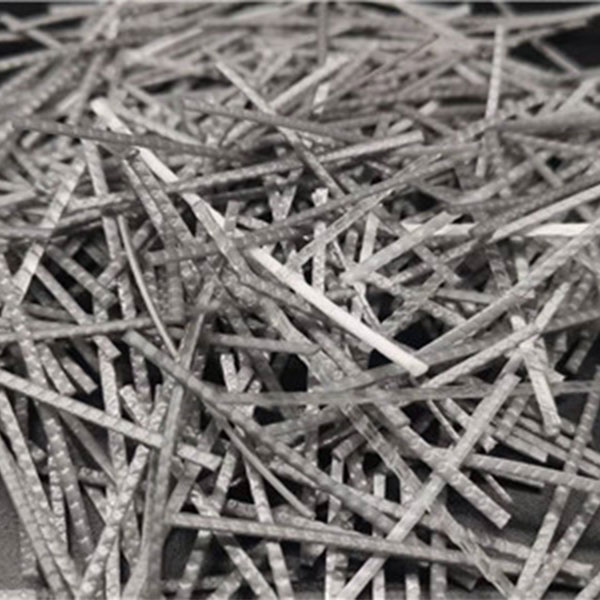
2021 China New Design China Manufacturer Wear Resistant Macro Fiber – Macro Synthetic Fiber Reinforced Concrete – Kehui
2021 China New Design China Manufacturer Wear Resistant Macro Fiber – Macro Synthetic Fiber Reinforced Concrete – Kehui Detail:
Concrete is a material of a high compressive but around ten times smaller tensile strength. Furthermore, it is characterized by a brittle behavior and does not allow transferring stresses after cracking. In order to avoid brittle failure and improve mechanical properties, it is possible to add fibers to the concrete mix. This creates fiber reinforced concrete (FRC) which is a cementitious composite material with a dispersed reinforcement in a form of fibers, e.g. steel, polymer, polypropylene, glass, carbon, and others.
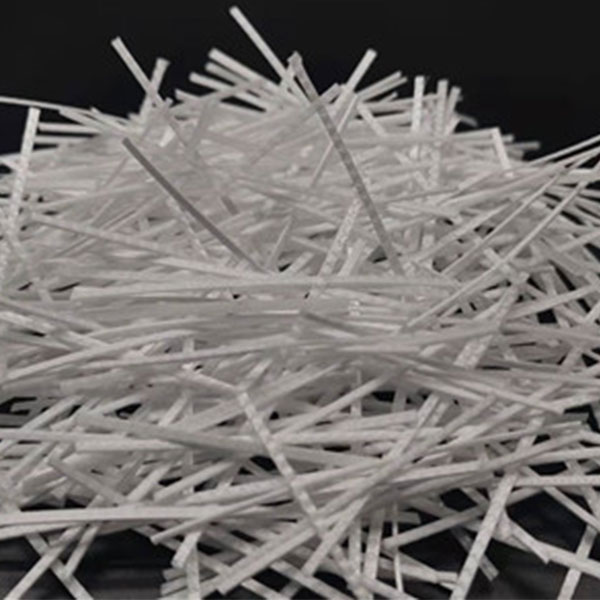
Fiber reinforced concrete is a cementitious composite material with a dispersed reinforcement in a form of fibers. Polypropylene fibers can be divided into microfibers and macrofibers depending on their length and the function that they perform in the concrete.
Macro synthetic fibers are typically used in structural concrete as a replacement for nominal bar or fabric reinforcement; they do not replace structural steel but macro synthetic fibers can be used to provide the concrete with significant post-cracking capacity.
Benefits:
Lightweight reinforcement;
Superior crack control;
Enhanced durability;
Post-cracking capacity.
Easily added to concrete mixture at any time
Applications
Shotcrete, concrete projects, such as foundations, pavements, bridges, mines, and water conservancy projects.
Product detail pictures:


Related Product Guide:
We'll make every effort and hard work being outstanding and excellent, and speed up our techniques for standing during the rank of global top-grade and high-tech enterprises for 2021 China New Design China Manufacturer Wear Resistant Macro Fiber – Macro Synthetic Fiber Reinforced Concrete – Kehui , The product will supply to all over the world, such as: Afghanistan, Montpellier, United Arab emirates, We have top engineers in these industries and an efficient team in the research. What is more, now we have our own archives mouths and markets in China at low cost. Therefore, we can meet different inquiries from different clients. Remember to find our website to check more information from our merchandise.
 By Annabelle from Morocco - 2018.07.27 12:26
In general, we are satisfied with all aspects, cheap, high-quality, fast delivery and good procuct style, we will have follow-up cooperation!
By Nicole from Sheffield - 2018.02.08 16:45
Related PRODUCTS
-

2021 Good Quality Sio2 Microspheres - Glass Bu...
-
2021 China New Design Steel Fibres - Fly Ash F...
-
Super Lowest Price Concrete Fiber - Fly Ash Fo...
-
China Cheap price Polypropylene Engineering Fib...
-
Manufacturer of Fly Ash Concrete Bricks - Fly ...
-
OEM/ODM China Concrete Fillers - Fly Ash For C...